The Sensitive Botanist
Interactive Experiences to Enhance
Human-Plant Connections

Project Details
Overview
Role
UX Research, Prototype Development, UX/UI Designer, 3D Modeling, Video & Voiceover & Learning Experience Design
Timeline
Oct - Nov 2023
Team
Audrey Reiley
Kimberly Blacutt
Eugina Chun
Lia Purnamasari
At Phipps Conservatory and Botanical Gardens in Pittsburgh, we designed new interactive experiences that enhance visitor engagement with plants through multi-sensory interaction, botanical education, and meaningful human-plant connections.
The project explores the potential for interactive experiences within a botanical garden setting that encourage visitors to notice, engage with, and appreciate plants by thoughtfully stimulating their senses of touch, vision, and smell, teaching them new vocabularies to describe those sensations, and creating meaningful connections between people and plants.
The Challenge
Through on-site observations, we discovered that many people wanted to touch plants but weren't sure if that was allowed, others couldn't identify plants they were interested in, and visitors wanted to know more about the origins and uses of certain plants they encountered.
Visitors frequently experience "plant blindness" - the tendency to overlook plants in their environment - which limits their ability to appreciate botanical diversity and ecological relationships. While Phipps provides an environment where visitors feel a sense of respite and calmness, they often struggle to form lasting connections with the plants they encounter. This inhibits their ability to translate their experience into everyday plant awareness and continued engagement with the natural world.
Traditional botanical gardens support visual observation, but often miss opportunities for hands-on discovery, leaving visitors without the tools and words needed to truly connect with and understand what they see. When visitors lack opportunities for tactile engagement and appropriate vocabulary, they cannot fully comprehend or relate to the plants they observe, limiting the potential educational and emotional impact of these spaces.

Design Principles
We want to offer visitors at Phipps new perspectives on plants by:
-
Engaging their sense of touch, smell, vision and hearing
-
Offering them new botanical vocabularies to describe their sensations and recognize plants
-
Establish meaningful connections between them and the plants they encounter

Research
To enhance the visitor experience at Phipps, our team conducted field research to identify areas for improvement and inform the design of new interactive experiences.
Our observational studies involved multiple site visits across different times and days of the week.
We systematically observed visitor behavior in eight distinct spaces throughout Phipps, positioning ourselves unobtrusively at strategic locations to document authentic interactions. During focused twenty-minute observation sessions in each area, we recorded detailed notes on visitor activities, conversations, and behavioral patterns.
This ethnographic method captured authentic insights into how patrons use the space, highlighting both challenges and opportunities to inform our design process.

Our observations revealed several recurring visitor needs and behaviors:
-
Uncertainty about tactile engagement was a recurring theme, as many visitors expressed interest in touching plants but were unsure whether physical interaction was permitted
-
Visitors frequently struggled to identify specific plants that caught their attention, highlighting ongoing challenges in plant identification
-
Visitors consistently sought to learn more about the origins of plants, their cultural significance, and practical uses beyond basic identification

Part of the team conducting on-site visitor interviews
-
Many visitors expressed a strong interest in interactive, hands-on experiences with plants
-
There was a notable enthusiasm for learning about plant identification, origins, uses, and care techniques
-
Guests highly valued immersive sensory experiences, especially those involving scents and striking visual displays
Onsite Observations
Key Findings
Interviews
To deepen our understanding beyond observations, we conducted interviews with visitors and Phipps staff. Visitor interviews explored motivations, memorable experiences, learning goals, and preferences for interactive features. We also interviewed the horticultural director, children's program coordinator, and nutrition lead to better understand the organization's views on patron demographics and improvement opportunities.
Key Findings
Research Question & Claim
Our research findings led us to focus on the following:
How could we design for a visitor experience at Phipps that gets people to notice and appreciate the distinctive qualities and characteristics of the plants they encounter so that they can better see their value and become inspired to care for, learn about, and connect with them?
Research Question
Our designs offer visitors at Phipps new perspectives on plants by thoughtfully stimulating their senses; by teaching them new vocabularies to notice and describe those sensations; and by drawing meaningful connections between people and plants so that visitors can appreciate them in ways they have not done before.
Claim
Design & Prototypes
The Botanist Glass

Botanist Glass interface design showing clue delivery system and augmented reality overlay
The Botanist Glass transforms visitors into active plant explorers through an augmented reality magnifying glass that delivers scientific, cultural, and sensorial clues about the botanical world around them. This experience mimics having a knowledgeable botanist as your personal guide, someone eager to share both expertise and genuine enthusiasm for plants.
The interface encourages multi-sensory engagement, prompting visitors to observe visual details, listen to environmental sounds, feel the textures of leaves, and notice distinctive scents. As visitors successfully identify species using the provided clues, they can "collect" each plant in their digital gallery. This gamified element culminates in a tangible takeaway: a physical card listing all the plants that visitors collect during their journey, which they receive at the end.
Sensorial Guessing Game

Central to the Botanist Glass is its sensorial guessing game, designed to awaken visitors' awareness of the rich sensory landscape surrounding them. The experience might challenge users to locate a plant with vibrant leaves, identify the source of a fragrance, or find foliage with a distinctive texture—transforming passive observation into active, embodied learning.
Beyond sensory exploration, the Botanist Glass provides intelligent plant recognition that responds to user proximity, delivering contextual information as visitors approach different specimens. By giving plants distinctive voices and personalities, the experience creates meaningful connections between visitors and the botanical world, highlighting each plant's cultural importance and human relationships.
Plant Identification


The Botanist Glass also serves as an intuitive wayfinding tool, guiding visitors to featured plants throughout Phipps using visual cues and directional prompts embedded within the augmented reality interface.
Navigation
Our initial concept focused on a smartphone app called "The Botanist" that would gamify plant collection through familiar mobile interfaces. However, we recognized that external notifications and ingrained phone behaviors could fragment the immersive experience we wanted to create.
To address this, we developed the Botanist Glass, a Phipps-provided device that turns a smartphone into a dedicated botanical tool. Its custom magnifying glass design removes digital distractions and offers a more intuitive, garden-friendly interface through the use of an iPhone, a 3D printed case and ProtoPie technologies. This solution applies calm technology principles, enabling visitors to focus on plants without the interruptions typically associated with mobile devices.
Design Evolution

Early design explorations for the Botanist Glass housing


User touching a Fiddle-leaf Fig to learn more about the plant's veins & edge shape


Design & Prototypes
Plant Identification Station
Intial System diagram for the Plant Identification Station
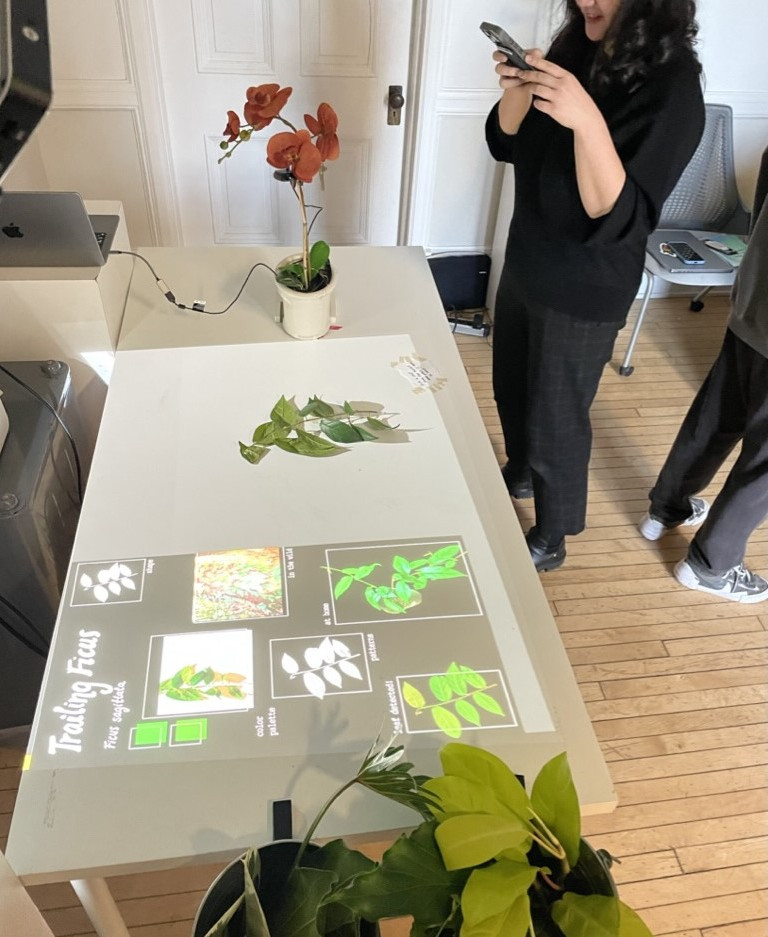
Our Plant Identification Station emphasizes direct interaction with real plant specimens. In response to visitor feedback requesting more tactile engagement, we designed an experience that encourages hands-on exploration and interaction. The interactive table allows visitors to inspect, touch, and smell actual leaves and plant parts, providing immediate digital feedback.
The system recognizes real plants placed on its surface and promotes botanical observation by teaching visitors precise descriptive language. Visitors learn to identify venation patterns such as palmate, parallel, or pinnate, and describe edge shapes using terms like entire, ondulate, or serrate. This approach transforms casual observation into a focused understanding of botanical literacy.
Beyond plant identification, the experience fosters cultural connections by sharing stories about each species, including their roles in traditional foods, ceremonies, rituals, and the origins of their scientific names. These narratives help visitors appreciate plants as integral to human culture and history.
The station also addresses sustainability by repurposing materials that would otherwise be discarded. Phipps staff regularly trim plants and compost fallen leaves as part of daily maintenance. Our system gives these clippings a second life as educational tools, allowing visitors to explore fresh specimens while supporting the garden's efforts to reduce waste.


The interactive table transforms plant observation by teaching visitors to see with a botanist's eye. Instead of vague descriptions like "green" or "pretty," visitors learn precise terminology to describe what they're actually observing. They learn to identify venation patterns, recognizing whether a leaf has palmate branching, like a maple, parallel lines, like a grass blade, or the single central vein of pinnate leaves. Edge shapes become equally specific: entire for smooth margins, ondulate for gentle waves, or serrate for tooth-like edges.
This vocabulary shift changes how people process what they see, moving from passive glancing to active analysis and giving them tools to notice botanical details they would have previously overlooked.
Botanical Vocabulary for Plant Recognition
The interactive table also heightens human-plant connections by highlighting each species' cultural significance, including its role in traditional foods and ceremonies, as well as the stories behind its name.
Establishing Meaningful Connections
User discovering plant origin stories through the interactive table interface
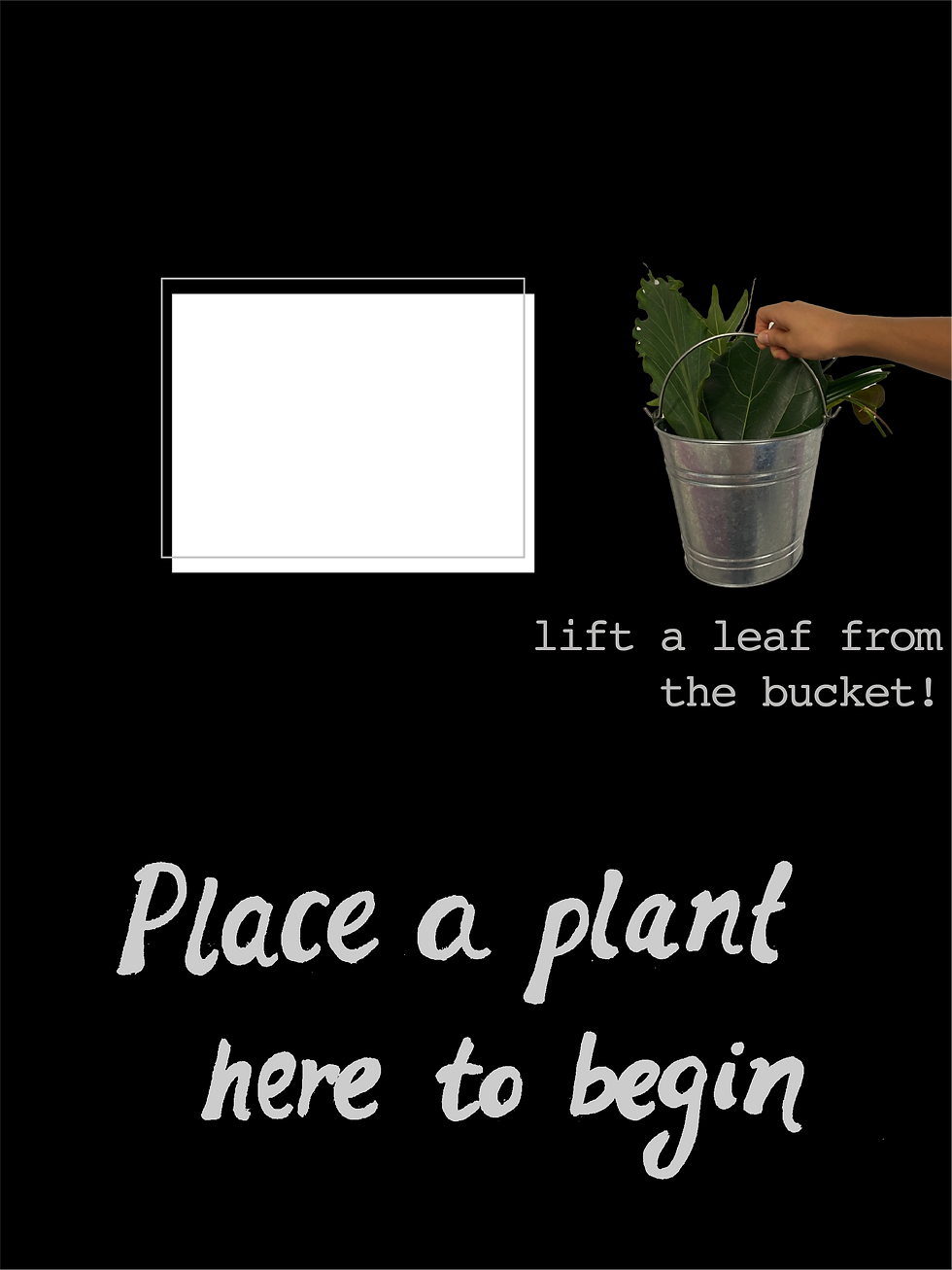
We transitioned from a small iPad interface to a projected tabletop display that transformed the entire surface into an interactive table. This projection system delivered a more comprehensive plant information directly onto the workspace where participants naturally focused their attention.
For the demonstration prototype, we enhanced the projected visual interface for leaf recognition and discreetly integrated the webcam into a potted orchid to preserve a seamless aesthetic.
Enhanced Interaction Design
Sample UI screens from beginning an interaction with the Plant Identification Station
After learning that Phipps staff routinely collect fallen leaves for composting, we arranged weekly pickup sessions to gather specimens for our machine learning model. We photographed hundreds of leaves from different angles and lighting conditions, building a comprehensive dataset of the plant species visitors would encounter at our interactive stations.
This extensive image collection was used to train Google's Teachable Machine algorithm, ensuring our Plant Identification Station could accurately recognize the specific plants featured in our experience. This approach allowed us to use fresh and real specimens for our users to interact with while they learned.
Machine Learning

Plant specimens used to train our machine learning algorithm for the identification table

Final Outcomes
The Sensitive Botanist project introduces two interactive experiences at Phipps Conservatory and Botanical Gardens that transform visitor engagement with living collections. Our solution includes the Botanist Glass, which uses augmented reality to guide sensory exploration, and the Plant Identification Station, combining machine learning with projection mapping to create an interactive surface for manipulating real plant specimens while learning botanical information.
The project shows how emerging technologies can enhance authentic engagement with cultural artifacts. Our methodology of ethnographic research with iterative prototyping offers a framework for cultural institutions seeking to deepen visitor connections while maintaining experience integrity.
Users interacting with the Plant Identification Station on our Demo Day
Given more time and resources, we identified several key areas for continued development and enhancement:
-
Deploy interactive identification stations in urban parks and nature trails, allowing visitors to identify and learn about any plant materials they discover during outdoor exploration
-
Integrate specialized optical filters into the Botanist Glass, such as UV light visualization that reveals pollen patterns and shows plants as pollinators perceive them
-
Conduct ergonomic studies to determine ideal form factors, materials, and interaction modalities for both the magnifying glass interface and table-based identification system
-
Establish measurable indicators of visitor engagement, learning retention, and behavioral change to evaluate how effectively the experiences achieve their educational and connection-building objectives